How hard money loans work
A bank underwrites you. A hard money lender underwrites the deal. Here is what that means for the size of the loan, the cash you bring and the way out.
- 90%
- of the price
- 12 mo
- typical term
- 0
- tax returns
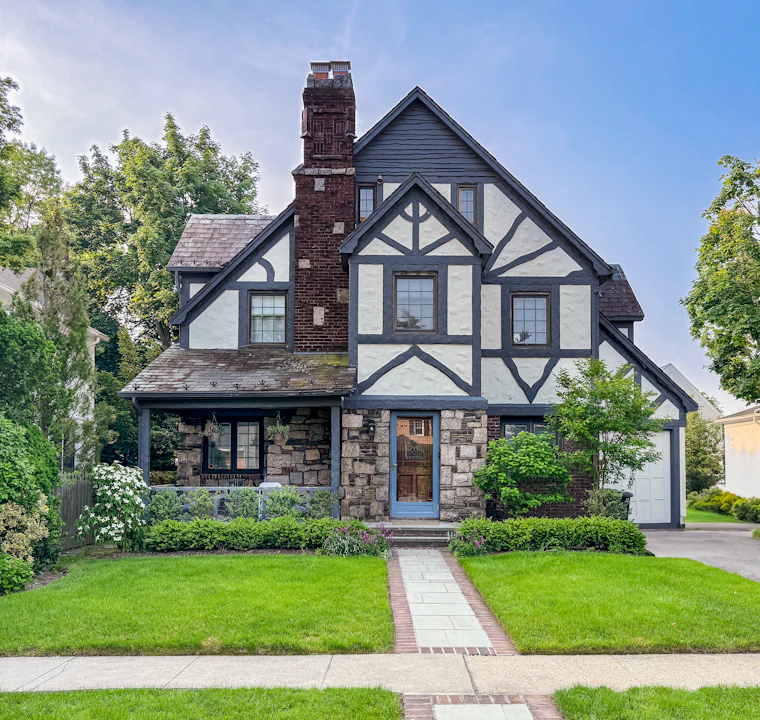 Sized on the deal
Typical flip
What a hard money loan is
It is a short-term loan secured by investment real estate. The amount comes mainly from the property and the plan: the price, the renovation or construction budget, and what the property will be worth when the work is finished. Credit and experience still matter, but there are no tax returns or pay stubs, and the house can need work on the day you buy it.
Payments are interest only. The loan is repaid in one piece when you sell or refinance, usually within 12 months.
Which loan matches your deal
“Hard money” covers three short-term loans. The fourth row is the long-term loan most investors exit into.
Swipe sideways to see every column
| Your deal | Loan | Maximum | Term |
|---|---|---|---|
| Buying a house that needs work | Fix and flip | 90% of price + 100% of rehab | 12 months |
| Building on a lot or a teardown | Ground-up construction | 75% of land + 100% of construction | 12–24 months |
| Finished, listed or leasing up | Bridge | 70% of value | 12 months |
| Rented, and you are keeping it | DSCR rental | 80% of value | 30 years |
How the loan amount is set
Two numbers are calculated and the lower one is the loan. The first is a share of your costs: up to 90% of the purchase price plus 100% of the rehab on a flip. The second is a share of the finished value: 70% of the after-repair value, or 75% for experienced investors.
A house bought for $400,000 with an $80,000 budget and a $700,000 resale value gets $440,000 from the first test and $490,000 from the second, so the loan is $440,000 and you bring $40,000 plus closing costs.
Hard money loan requirements
- Investment property only: a 1–4 unit house, townhome or condo you will not live in
- Credit from 660, or 680 on a first flip and on construction
- An LLC or corporation as the borrower, with its owners as guarantors
- A purchase contract, a scope of work and a budget
- Cash for 10% to 25% of the price, closing costs and one month of interest
- An appraisal that supports the as-is and after-repair values
How to get a hard money loan
- 1
Tell us about the deal
Your contact details and a line about the property. No application at this stage.
- 2
Hear where the deal stands
Which loan fits and how much it covers, before you spend money on an appraisal. If the numbers don’t work, we tell you that too.
- 3
Get written terms
A soft credit check that leaves your score alone, then a term sheet. After you accept it: appraisal, title, insurance and your company documents.
- 4
Close in your LLC
Funds go to escrow at closing. Rehab and construction money comes out in draws as each stage of work is finished.
Hard money, bridge and DSCR: which is which
A hard money loan buys the property and pays for the work. A bridge loan is short-term money on a property that is already finished and waiting to sell or lease. A DSCR loan is the long-term exit: once the property is rented, it replaces the short-term loan with a 30-year loan qualified on the rent.
Compared with a bank mortgage, a hard money loan skips tax returns and W-2s, lends on a house in poor condition and includes the renovation money in the loan.
More hard money questions
Do hard money lenders look at credit?
Yes. Our programs start at 660, or 680 for a first flip. Terms come from a soft pull that does not affect your score.
How much down payment does a hard money loan need?
Usually 10% to 25% of the price plus closing costs. The rehab is financed at 100%.
Can I get a hard money loan for my first flip?
Yes. With 680+ credit the loan covers 75% of the price, up to 90% with 740+, plus all of a light or moderate rehab. See fix and flip loans for beginners.
Can I get a hard money loan on a home I live in?
No. These are business-purpose loans on investment property.
How do I get out of a hard money loan?
Sell the property, or refinance into a 30-year DSCR loan once it is rented. If the sale takes longer than planned, a bridge loan can pay off the rehab loan.
How do I get the rehab or construction money?
It is set aside at closing and paid out in draws. You ask for a draw, an inspector confirms the work, and the funds are released.
Does the loan have to be in an LLC?
Yes, an LLC or a corporation borrows. If you don’t have one yet, you can set it up before closing.
Which states do you lend in?
In 47 states and Washington, DC: everywhere except North Dakota, South Dakota and Vermont. California, Florida and Texas are our main markets. Some programs have their own rules in certain states and counties, and we confirm them when we look at the deal.
Have a deal in hand?
Leave your contact details and a line about the deal. We get back to you with which loan fits, how much it covers and written terms, before you pay for an appraisal.
- No hard credit pull to see terms
- No tax returns or W-2s
- Business-purpose loans on investment property